



Production incidents are an unavoidable reality of modern software systems. Even well-designed architectures eventually encounter failures caused by unexpected interactions between services, infrastructure limits, software bugs, or operational mistakes.
The difference between resilient engineering organizations and fragile ones is not whether incidents occur. It is how quickly they detect them, how effectively they respond, and how well they learn from them.
Behind every outage notification or system alert is a structured process involving monitoring systems, engineers, infrastructure tools, and operational procedures. Understanding what actually happens inside a production incident helps teams design more reliable systems and respond more effectively when failures occur.
What Is a Production Incident?
A production incident is any event that negatively impacts the availability, performance, or correctness of a live system.
Examples include:
- application downtime
- API failures
- degraded system performance
- data corruption
- infrastructure outages
- failed deployments
Organizations often classify incidents by severity levels based on business impact.
Typical classifications include:
- SEV-1: critical outage affecting customers or revenue
- SEV-2: significant degradation of service
- SEV-3: limited operational issue with minor impact
These severity levels determine how urgently the incident must be addressed and which teams are involved.
The Lifecycle of a Production Incident
Although every incident is different, most follow a similar operational lifecycle. This lifecycle reflects how engineering teams detect, analyze, mitigate, and learn from system failures.
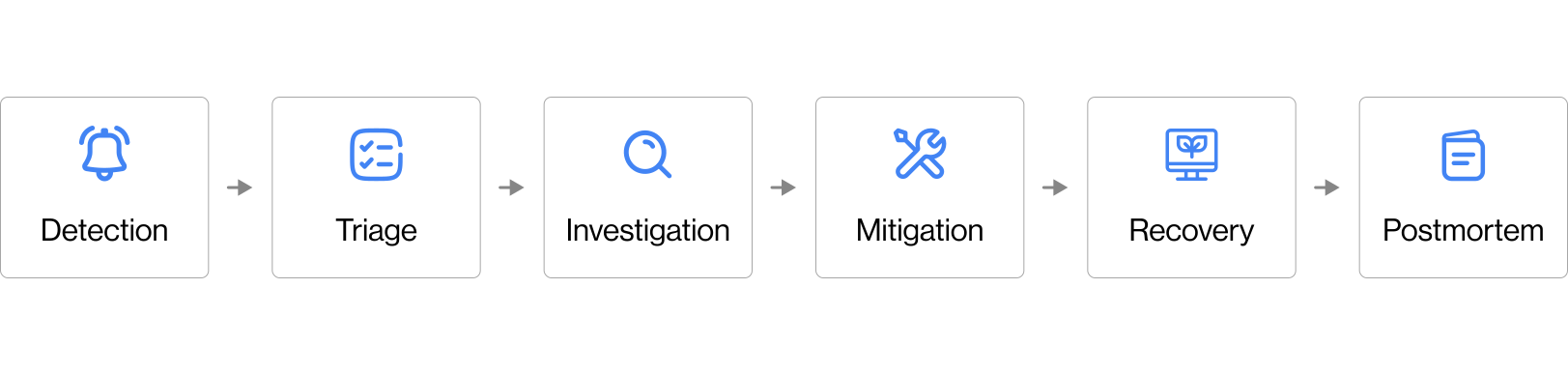
Figure: Typical lifecycle of a production incident. Incidents usually move through stages of detection, triage, investigation, mitigation, recovery, and post-incident analysis.
The lifecycle typically includes six stages:
- Detection
- Triage
- Investigation
- Mitigation
- Recovery
- Post-incident analysis
Each stage involves different tools, engineering roles, and decision-making processes.
Stage 1: Incident Detection
Incidents typically begin with monitoring systems detecting abnormal behavior.
Modern production systems rely on observability tools that track:
- system metrics
- application logs
- distributed traces
- infrastructure health
- synthetic user checks
When a system metric crosses a predefined threshold, an alert is triggered. These alerts are usually routed through incident management platforms such as PagerDuty, Opsgenie, or Slack integrations.
For example, a monitoring system may detect:
- sudden increases in error rates
- latency spikes
- service crashes
- abnormal infrastructure resource usage
Once an alert fires, the on-call engineer is notified.
Stage 2: Incident Triage
Once an alert is triggered, the on-call engineer begins triage.
Triage aims to quickly answer several key questions:
- Is the alert legitimate or a false positive?
- What is the severity of the issue?
- Which systems or services are affected?
- Does the issue require escalation?
The engineer will typically inspect monitoring dashboards, review recent deployments, and verify whether the problem affects customers or internal systems.
If the incident is confirmed, additional engineers and teams may be engaged depending on system ownership.
Clear severity classification during triage helps ensure that the appropriate resources are mobilized quickly.
Stage 3: Incident Investigation
Once the incident is confirmed, engineers begin investigating the root cause.
Investigation involves examining multiple layers of the system, including:
- application logs
- service dependencies
- infrastructure metrics
- database activity
- recent configuration changes
- deployment histories
In distributed systems, failures often propagate through multiple services. A single slow dependency may cause cascading delays across the entire system.
For example, a database latency spike may lead to:
- slower API responses
- overloaded application servers
- queue backlogs
- cascading failures in dependent services
Understanding these dependencies requires strong observability tools and architectural visibility.
For deeper insight into distributed system complexity, see:
Cloud Architecture Is Not About Technology. It Is About Constraints.
Stage 4: Incident Mitigation
During an incident, the primary objective is restoring service availability as quickly as possible.
Mitigation focuses on stabilizing the system rather than immediately identifying the full root cause.
Common mitigation strategies include:
- rolling back recent deployments
- restarting failing services
- scaling infrastructure
- disabling problematic feature flags
- redirecting traffic away from failing components
Many organizations maintain operational runbooks, which are documented procedures describing how to resolve known operational problems.
The goal is to reduce downtime and restore functionality quickly.
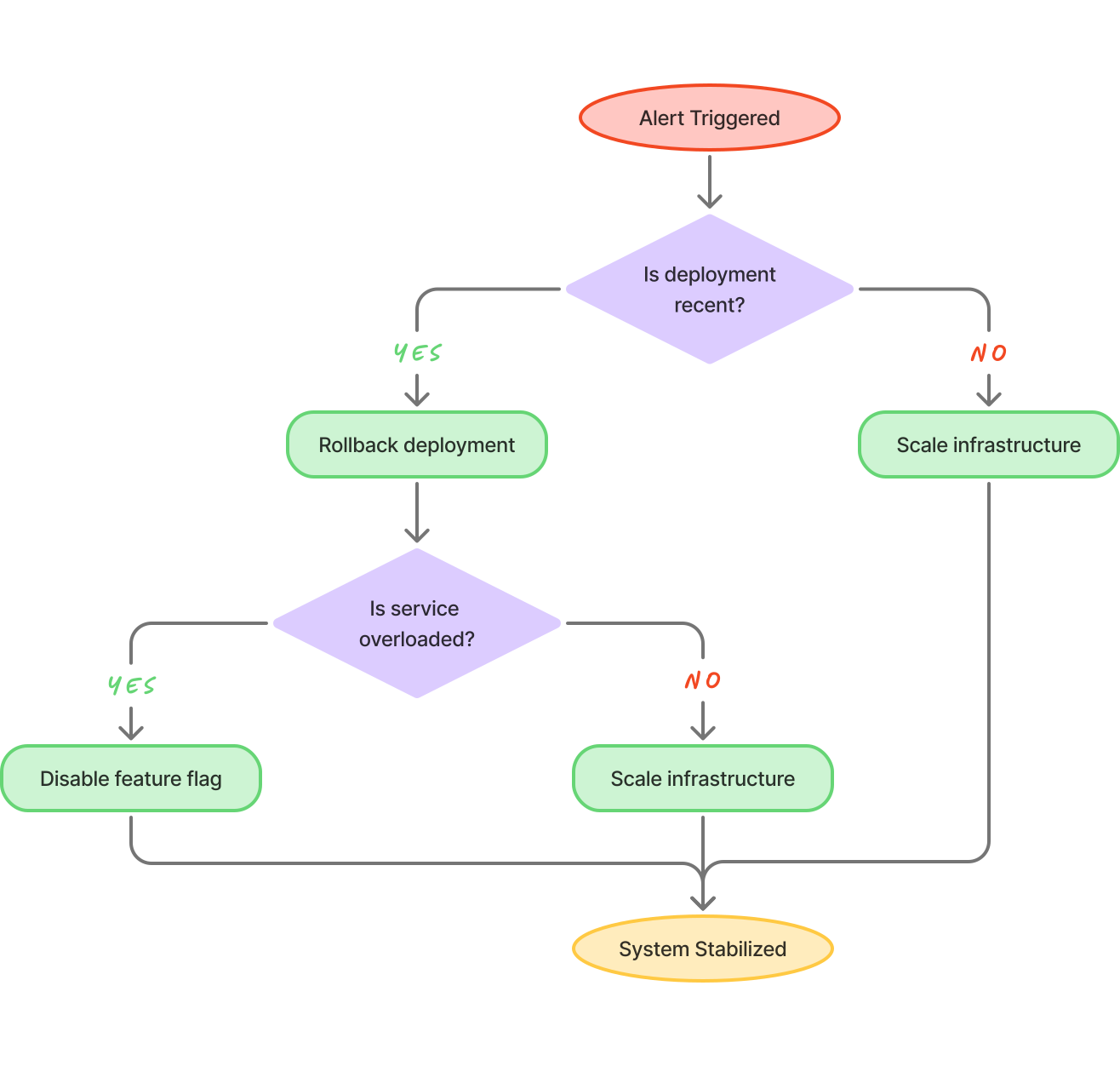
Figure: Simplified mitigation decision flow used by engineering teams when responding to production incidents.
Stage 5: System Recovery
After the immediate mitigation steps stabilize the system, engineers move into the recovery phase.
Recovery involves ensuring that the system returns to a fully healthy state.
This may include:
- restoring corrupted data
- reprocessing failed jobs or queues
- resynchronizing distributed systems
- validating system integrity
- monitoring the system for recurring issues
Recovery must be handled carefully. Rushing this phase can introduce additional failures or hidden inconsistencies.
Engineering teams often increase monitoring sensitivity during this phase to ensure the incident does not reappear.
Stage 6: Post-Incident Analysis
Once the system is stable, engineering teams conduct a post-incident review, commonly called a postmortem.
The goal of a postmortem is to understand why the incident occurred and how similar incidents can be prevented in the future.
A well-structured postmortem typically includes:
- a detailed timeline of events
- root cause analysis
- contributing factors
- mitigation steps taken during the incident
- recommended improvements
High-performing engineering organizations adopt blameless postmortem cultures, where the focus is on improving systems rather than assigning blame to individuals.
Why Production Incidents Become Complex
Production incidents rarely have a single simple cause. Instead, they usually emerge from complex interactions between software, infrastructure, and operational processes.
Common contributing factors include:
- infrastructure limits
- software bugs
- unexpected traffic patterns
- cascading service dependencies
- configuration errors
Modern distributed architectures amplify these interactions, making failures difficult to diagnose quickly.
For guidance on building resilient architectures, see:
The Real Meaning of Technical Debt
How Engineering Teams Prepare for Incidents
Mature engineering organizations assume that incidents will occur and design operational processes accordingly.
Common practices include:
On-Call Rotations
Engineering teams maintain on-call schedules to ensure incidents are addressed quickly at any time.
Runbooks
Runbooks provide documented instructions for resolving known operational problems.
Observability Platforms
Observability tools combine metrics, logs, and distributed tracing to help engineers understand system behavior.
Chaos Engineering
Some organizations intentionally introduce failures into production-like environments to test system resilience.
The Business Impact of Production Incidents
Beyond technical disruption, production incidents often have broader business consequences:
- revenue loss
- customer dissatisfaction
- reputational damage
- increased operational costs
For this reason, incident response is not just an engineering concern. It is an essential component of operational risk management.
Leading technology companies invest heavily in incident response systems and reliability engineering to minimize downtime.
Conclusion
Production incidents are an unavoidable part of operating complex software systems. Even highly reliable platforms encounter failures due to the unpredictable interactions between infrastructure, software, and human processes.
What separates resilient organizations from fragile ones is how effectively they detect, respond to, and learn from incidents.
Strong incident management practices include:
- comprehensive monitoring and alerting
- clear incident response procedures
- rapid mitigation strategies
- structured post-incident analysis
By treating incidents as learning opportunities rather than operational failures, engineering teams can continuously improve the reliability and resilience of their systems.