



Technical debt is one of the most widely used and frequently misunderstood concepts in modern software engineering. In many organizations, the term is casually used to describe messy code, outdated frameworks, or poorly written functions. While these can be symptoms, they rarely capture the full scope of the issue.
Technical debt describes the future cost created by engineering decisions made today. When teams prioritize delivery speed over architectural sustainability, they often introduce shortcuts that must eventually be repaid through refactoring, redesign, or system restructuring.
These shortcuts may initially accelerate development. However, as systems grow and evolve, they introduce complexity that increases the cost of change, reduces engineering velocity, and raises operational risk.
In large software systems, technical debt often becomes one of the primary factors limiting innovation.
The Origin of the Technical Debt Concept
The term technical debt was introduced by software engineer Ward Cunningham in 1992. Cunningham used the metaphor of financial borrowing to explain to stakeholders why refactoring work is necessary in software projects.
Just as financial debt allows organizations to spend money before earning it, technical debt allows teams to ship software faster by accepting design compromises.
However, these compromises must eventually be addressed. If they are ignored, the system accumulates "interest" in the form of:
- increased maintenance costs
- slower feature development
- architectural constraints
- operational instability
Software architect Martin Fowler later expanded the concept and introduced frameworks explaining how technical debt emerges and how it should be managed.
Source: Martin Fowler - Technical Debt
Technical Debt as a Cost of Change
One of the most useful ways to understand technical debt is through the concept of cost of change.
Every software system has a certain effort associated with modifying it. As complexity increases, that effort grows.
Example:
- Clean architecture: 2 days
- Moderate technical debt: 1 week
- High technical debt: 3-4 weeks
The increase is rarely linear. Once systems reach a certain level of complexity, dependencies between components create cascading effects where small changes require modifications across multiple parts of the system.
This phenomenon is particularly visible in large distributed systems and legacy enterprise applications.
The Compounding Effect of Technical Debt
Technical debt behaves similarly to financial debt because its impact compounds over time.
Each shortcut introduces additional complexity. As more shortcuts accumulate, the system becomes increasingly difficult to modify and maintain.
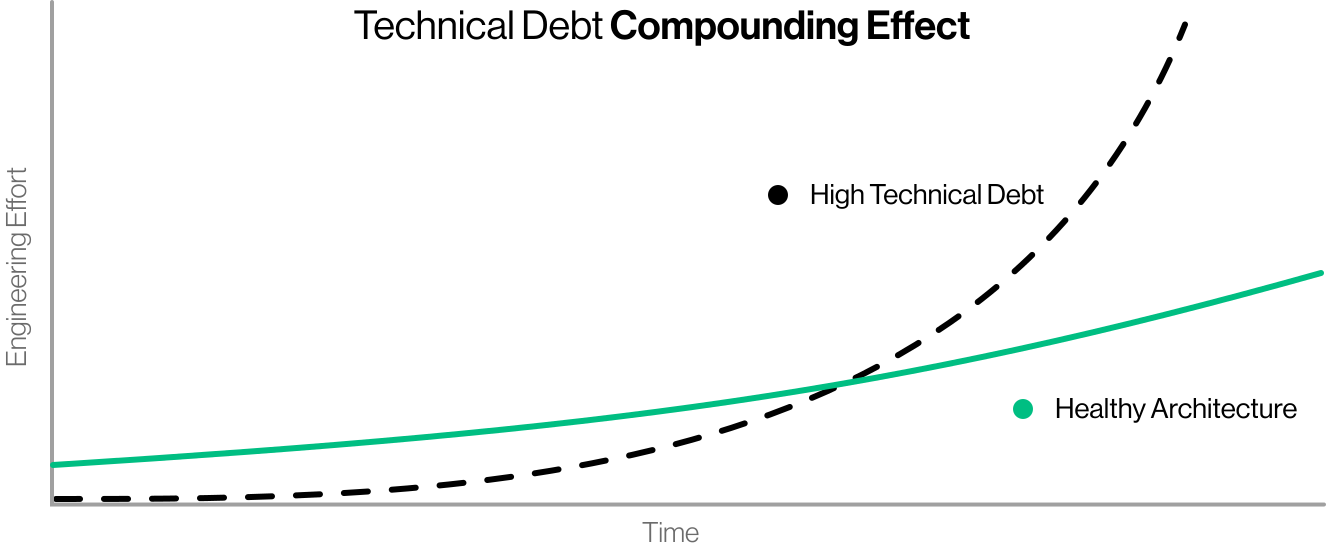
Figure: The compounding effect of technical debt. As architectural shortcuts accumulate, the engineering effort required to deliver new features grows disproportionately over time.
In practical terms, compounding technical debt results in:
- slower feature development
- increased debugging effort
- higher operational risk
- longer onboarding time for engineers
This gradual degradation is often described as architecture erosion, where the original design of the system slowly deteriorates due to incremental shortcuts.
Source: IBM - What is Technical Debt
Structural Layers of Technical Debt
Technical debt is often incorrectly associated only with poor code quality. In reality, it exists across multiple layers of software systems.
Understanding these layers helps engineering teams identify where debt is accumulating.
Code-Level Debt
Code-level debt includes issues such as:
- duplicated logic
- poor naming conventions
- complex or unreadable functions
- missing automated tests
Although visible and relatively easy to detect, code-level debt is rarely the most damaging form of technical debt.
Architectural Debt
Architectural debt arises when system design decisions limit flexibility, scalability, or evolvability.
Examples include:
- tightly coupled services
- poorly defined domain boundaries
- synchronous dependency chains
- monolithic data models
Architectural debt becomes particularly problematic when systems must scale or integrate with additional services.
For a deeper exploration of system architecture constraints, see:
Cloud Architecture Is Not About Technology. It Is About Constraints.
Infrastructure Debt
Infrastructure debt occurs when operational environments evolve without structured management.
Typical examples include:
- manual deployment processes
- lack of CI/CD automation
- inconsistent development environments
- outdated infrastructure platforms
Infrastructure debt increases operational risk and slows release pipelines.
Related article: What Are the Best Cloud Architecture Options for Small Businesses?
Data Debt
Data systems frequently accumulate hidden technical debt through:
- inconsistent schemas
- fragmented pipelines
- duplicated datasets
- undocumented transformations
Data debt often manifests as unreliable analytics or difficult system integrations.
Organizational Debt
Some technical debt originates not from code or infrastructure but from organizational structure.
Examples include:
- unclear service ownership
- fragmented team responsibilities
- undocumented architecture decisions
- inconsistent engineering practices
Organizational debt can amplify other forms of technical debt by making systems harder to maintain and evolve.
The Technical Debt Quadrant
Software architect Martin Fowler introduced the Technical Debt Quadrant, a framework that categorizes technical debt based on two dimensions:
- intent: deliberate vs inadvertent
- engineering discipline: prudent vs reckless
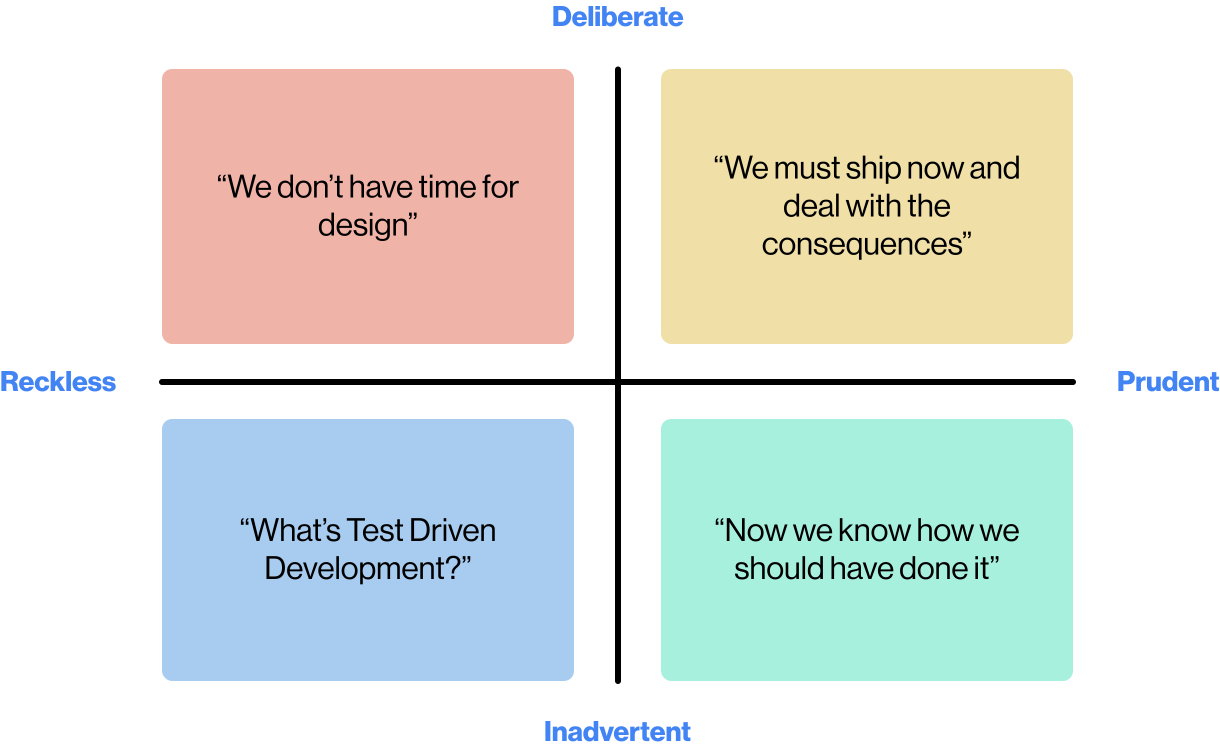
Figure: Martin Fowler's Technical Debt Quadrant. The model categorizes technical debt according to intent and engineering discipline.
Source: Martin Fowler - Technical Debt Quadrant
The quadrant produces four categories.
Deliberate and Prudent
This represents strategic technical debt.
Teams intentionally take a shortcut in order to ship quickly, with the understanding that the debt will be repaid later.
Example:
A startup may deploy a simplified architecture to validate product-market fit before investing in scalable infrastructure.
Deliberate and Reckless
This occurs when teams knowingly introduce risky shortcuts without considering long term consequences.
Examples include:
- ignoring testing frameworks
- bypassing architecture reviews
- implementing fragile integrations under deadline pressure
This type of technical debt often leads to system instability.
Inadvertent and Prudent
In this case, engineers initially build a reasonable solution but later discover better approaches.
Examples:
- improved architectural patterns
- more efficient database strategies
- event driven architectures replacing synchronous systems
This type of debt reflects the natural evolution of technology.
Inadvertent and Reckless
This category occurs when teams unintentionally create technical debt due to poor engineering practices.
Examples include:
- lack of architectural planning
- inexperienced teams designing critical systems
- insufficient monitoring or testing
This type of technical debt is often the most expensive to resolve.
Technical Debt and System Complexity
One of the most significant drivers of technical debt is system complexity growth.
Software systems typically evolve through several stages:
- initial architecture design
- feature expansion
- integration with third party services
- infrastructure scaling
- operational automation
At each stage, additional dependencies are introduced.
Without periodic refactoring, the system gradually accumulates constraints that make future development more difficult.
For a deeper look at system evolution in enterprise environments, see:
Enterprise Software Modernisation: When and How to Transform Legacy Systems
The Cost of Ignoring Technical Debt
Organizations that ignore technical debt often encounter predictable consequences.
Over time:
- product development slows significantly
- system outages become more frequent
- infrastructure costs increase
- onboarding new engineers becomes difficult
In extreme cases, companies are forced to perform large scale system rewrites, which carry significant operational risk.
Managing Technical Debt
Effective engineering organizations treat technical debt as a managed engineering asset rather than an accidental by product.
Several practices help control technical debt accumulation.
Technical Debt Backlogs
Teams maintain lists of known debt items including:
- description of the issue
- impact on development velocity
- estimated refactoring effort
This makes technical debt visible to both engineering and product leadership.
Refactoring Budgets
Many engineering organizations allocate 10-20% of development capacity to maintenance and refactoring work.
This prevents debt from accumulating unchecked.
Architecture Reviews
Regular architecture reviews help identify structural problems early.
Reviews often examine:
- service dependencies
- scalability constraints
- operational bottlenecks
- infrastructure resilience
For guidance on aligning architecture work with business goals, see:
Enterprise Software Strategy: Aligning Technology with Business Growth
Engineering Metrics
Teams frequently monitor metrics that indicate growing technical debt.
Examples include:
- deployment frequency
- lead time for changes
- change failure rate
- mean time to recovery (MTTR)
These metrics are commonly used in DevOps performance frameworks.
Source: DORA - Accelerate State of DevOps
Technical Debt as a Strategic Engineering Concern
Technical debt is not merely a software engineering inconvenience.
It represents a structural constraint on an organization's ability to innovate.
Modern businesses depend heavily on software platforms. When those platforms become difficult to evolve, the entire organization becomes slower.
For this reason, leading technology companies treat technical debt as a first class engineering concern and integrate it into architectural planning, engineering culture, and product strategy.
Conclusion
Technical debt should not be understood simply as messy code.
It represents the accumulated consequences of engineering tradeoffs made under real world constraints.
When managed deliberately, technical debt can accelerate innovation and product development. When ignored, it gradually constrains system evolution and organizational agility.
Successful engineering organizations therefore focus not on eliminating technical debt entirely but on understanding, tracking, and strategically managing it.