


Small businesses today face an important technology decision: how to design a cloud architecture that is reliable, scalable, and cost-effective without introducing unnecessary complexity.
Unlike large enterprises with dedicated platform teams, smaller organisations must balance speed, operational simplicity, and long-term scalability. Choosing the wrong architecture early can introduce technical debt, increase operational risk, and slow down future growth.
In this guide, we explore the best cloud architecture options for small businesses, when each approach works best, and how to choose the right model.
Why Cloud Architecture Matters for Small Businesses
Cloud infrastructure allows small companies to operate with capabilities that previously required large IT departments. With the right architecture, organisations can:
- launch products faster
- scale systems without investing in hardware
- reduce infrastructure management overhead
- improve system reliability
However, architecture decisions should not be made purely from a technical perspective. They should align with business objectives, team capabilities, and long-term technology strategy.
For example, enterprise organisations often approach cloud architecture through structured strategy and delivery models. Westpoint discusses this in Enterprise Software Strategy: Aligning Technology with Business Growth.
1. Single Server Cloud Architecture
For many early-stage businesses, the simplest architecture is also the most effective.
How it works
A single cloud instance hosts:
- the web application
- backend services
- database
- background tasks
This architecture is commonly deployed on a single virtual cloud server.
Advantages
- extremely simple setup
- low operational overhead
- minimal infrastructure cost
- fast development cycles
Limitations
- limited scalability
- potential single point of failure
- performance bottlenecks as traffic grows
This architecture works well for:
- early SaaS startups
- internal tools
- MVP platforms
- small business systems
Many companies run successfully on this architecture until traffic or system complexity grows.
2. Managed Platform Architecture (PaaS)
Platform-as-a-Service solutions remove most infrastructure management responsibilities.
These platforms automatically handle:
- deployment
- scaling
- load balancing
- monitoring
- infrastructure maintenance
Developers focus primarily on building product functionality instead of managing infrastructure.
Advantages
- minimal DevOps requirements
- automatic scaling
- built-in monitoring and logging
- faster releases
Limitations
- reduced infrastructure control
- potential vendor lock-in
- long-term cost considerations
Managed platforms are ideal for companies that want rapid product development without maintaining infrastructure teams.
3. Serverless Architecture
Serverless architectures allow developers to deploy event-driven functions instead of long-running servers.
In this model, the cloud provider manages all infrastructure and automatically scales resources based on usage.
Typical serverless workloads include:
- APIs
- automation workflows
- background processing
- event-driven applications
Advantages
- no server management
- automatic scaling
- cost efficiency for variable workloads
- strong resilience
Limitations
- architectural complexity
- cold start latency
- harder debugging
Serverless platforms are especially useful for event-driven systems and APIs with unpredictable traffic patterns.
4. Container-Based Architecture
As businesses grow, container architectures provide stronger flexibility and scalability.
Containers package applications and their dependencies into portable environments that run consistently across development and production systems.
Advantages
- consistent environments across development and production
- strong scalability
- flexible deployment models
- improved service isolation
Limitations
- operational complexity
- requires DevOps expertise
- orchestration overhead
Container architectures are best suited for businesses running multiple services or complex platforms.
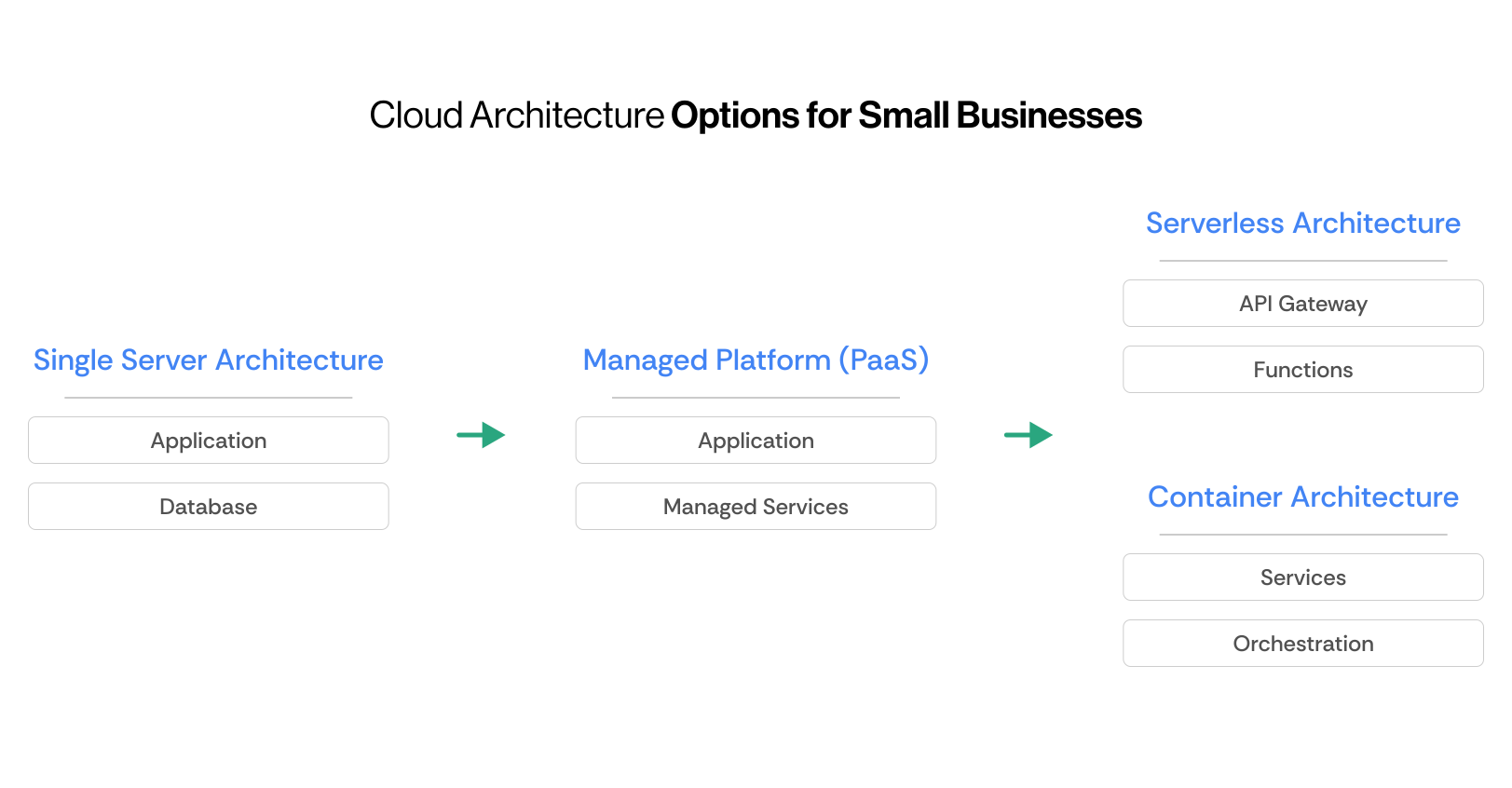
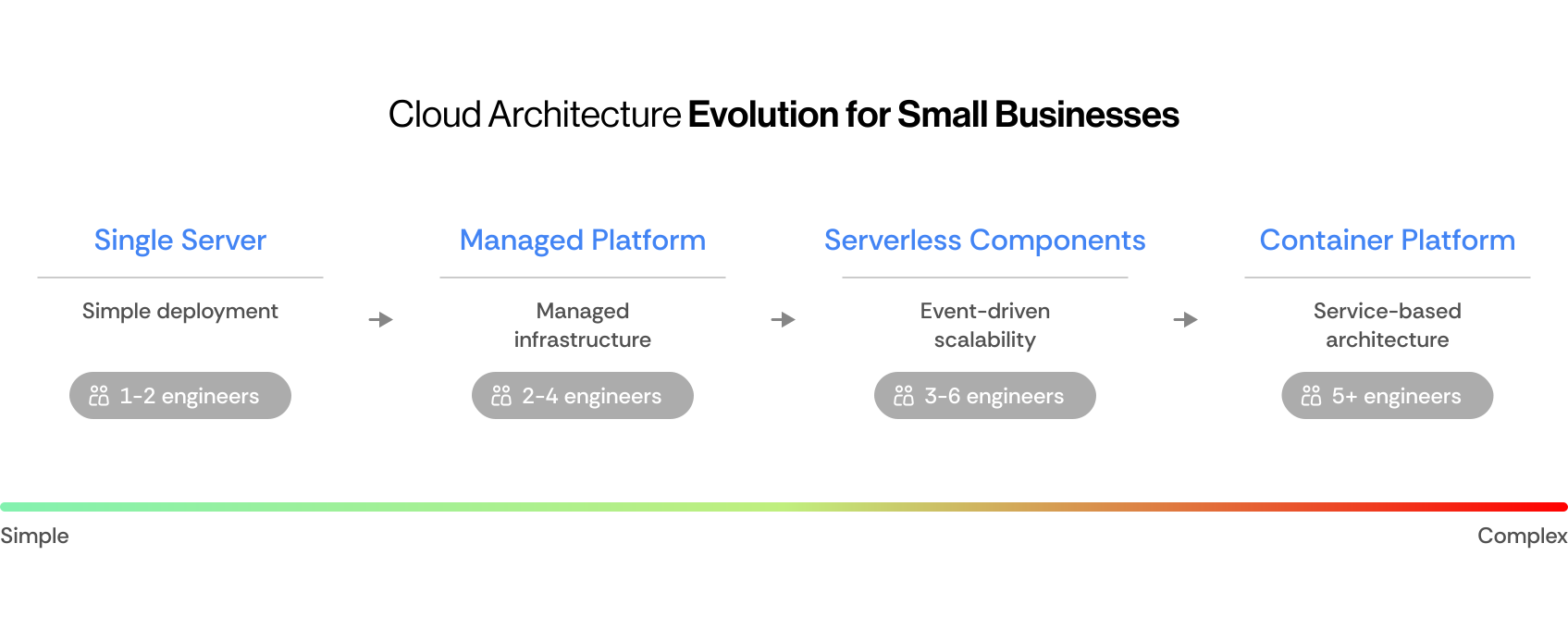
Cloud Architecture Evolution for Small Businesses
Infrastructure rarely changes in a single step. Instead, systems typically evolve gradually as products scale and engineering requirements grow.
Most companies follow a progression from simple deployment models to more flexible distributed architectures.
Choosing the Right Architecture
Small businesses should avoid designing infrastructure for hypothetical scale.
Instead, architecture decisions should consider:
Business stage
Early companies benefit from simple infrastructure that allows rapid product iteration.
Engineering capability
Infrastructure complexity should match the expertise of the engineering team.
Growth expectations
Systems expected to scale quickly may require more flexible architecture patterns earlier.
Real-World Example: Enterprise Cloud Architecture
Even large organisations face similar architectural challenges when modernising systems.
For example, Westpoint worked with Toyota to design a scalable cloud-native architecture supporting secure and high-availability systems used at enterprise scale.
Read the Toyota Motor Corporation case study
More examples are available on the Westpoint case studies page.
Practical Recommendation
For most small businesses, the following progression works well:
- Start with single-server or managed platform architecture
- Introduce serverless services for background processing
- Adopt container orchestration only when system complexity requires it
This approach keeps infrastructure manageable while preserving long-term scalability.
Final Thoughts
Cloud architecture decisions should prioritise simplicity, reliability, and adaptability.
Modern cloud platforms provide powerful infrastructure capabilities, but the best architecture is usually the one that solves today's problem without introducing unnecessary complexity.
By starting with a pragmatic architecture and evolving systems gradually, small businesses can build platforms that remain cost-efficient, reliable, and scalable over time.