



Software engineering is undergoing a fundamental shift.
For years, success in engineering was defined by technical execution. Writing clean code, building systems, and delivering features were enough. Today, that is no longer sufficient.
The most effective engineers are no longer just developers. They are product engineers.
This shift reflects a deeper change in how software is built. Engineering is no longer just about implementation. It is about understanding users, shaping decisions, and delivering outcomes that matter.
What Is a Product Engineer?
A product engineer is an engineer who combines technical execution with product thinking.
They do not just build systems. They build products that solve real problems.
Product engineering is the practice of developing products by integrating engineering, design, and business strategy into a single continuous process.
Source: https://www.atlassian.com/agile/product-management/product-engineering
In practice, this means:
- understanding user needs
- aligning with business goals
- prioritizing impact over output
- taking ownership of outcomes
The difference is subtle, but critical.
Developers focus on building software. Product engineers focus on building the right software.
The Mindset Shift
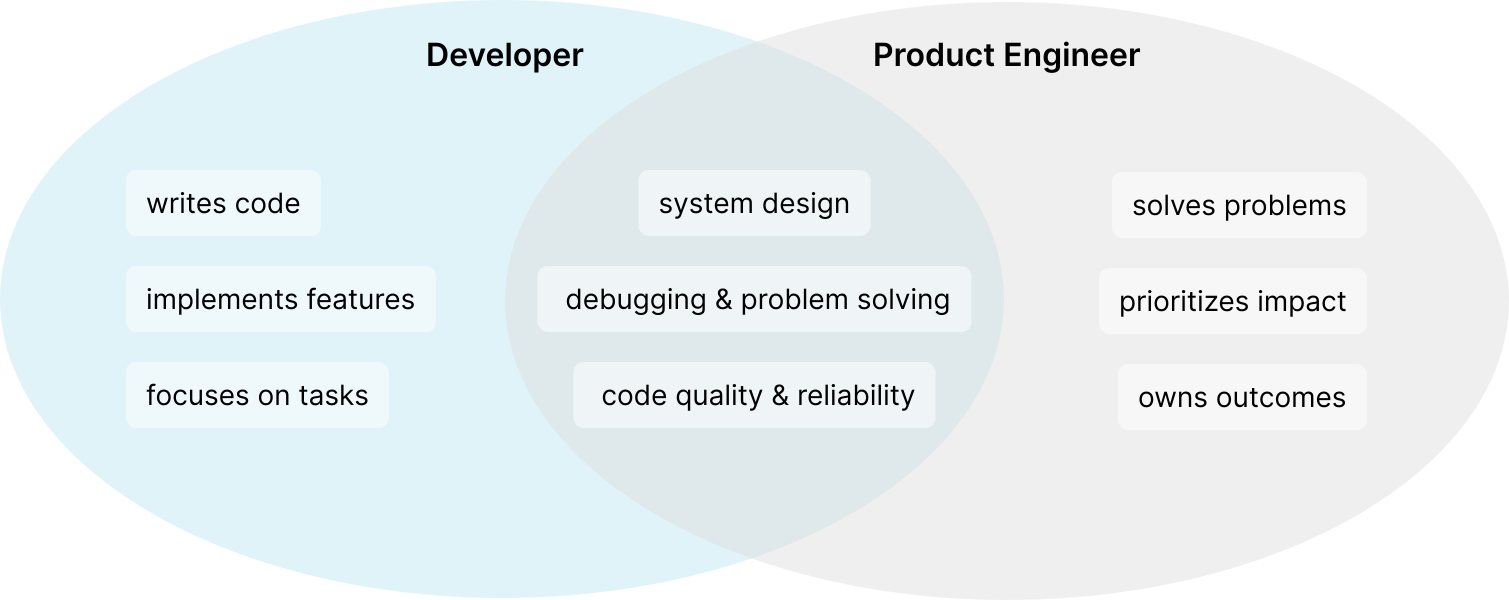
Figure: The shift from developer to product engineer. Both share core engineering foundations, but product engineers extend into ownership, impact, and decision-making.
At the core, both roles share the same engineering foundation:
- system design
- debugging and problem solving
- code quality and reliability
The difference lies in how these skills are applied.
Developers optimize for correctness. Product engineers optimize for impact.
Why This Shift Is Happening
Software Has Become the Business
In many industries, software is no longer a support function. It is the product itself.
Companies now compete through:
- digital platforms
- user experience
- data-driven systems
This means engineers are directly contributing to:
- revenue
- customer retention
- competitive advantage
Source: https://www.ibm.com/think/topics/product-engineering
Speed of Iteration Matters
Modern product development is continuous:
- build
- ship
- measure
- iterate
Engineers are no longer isolated from this loop. They are embedded within it.
This requires understanding not just how to build, but what to build next and why.
Engineering Roles Are Expanding
The traditional separation between engineering and product is dissolving.
Engineers today are expected to:
- contribute to product decisions
- understand business context
- evaluate trade-offs beyond code
This shift creates a new type of engineer: one who operates across both technical and product domains.
Output vs Outcome
The most important distinction between a developer and a product engineer is how success is measured.
| Developer Mindset | Product Engineer Mindset |
|---|---|
| Deliver features | Deliver outcomes |
| Focus on implementation | Focus on impact |
| Solve assigned problems | Define the right problems |
| Optimize for code quality | Optimize for user value |
This changes how engineers approach their work.
What Skills Define a Product Engineer
1. Product Thinking
Product engineers understand:
- user pain points
- product context
- business goals
They evaluate whether a feature should exist before building it.
2. Decision Making and Trade-Offs
Every engineering decision involves trade-offs:
- speed vs scalability
- simplicity vs flexibility
- delivery vs perfection
Product engineers make these trade-offs intentionally, based on impact.
3. Ownership
Product engineers take ownership beyond code:
- problem definition
- solution design
- outcome measurement
They are responsible not just for delivery, but for success.
4. Communication
Product engineers collaborate closely with:
- product managers
- designers
- stakeholders
They can clearly explain:
- why something should be built
- why something should not be built
5. Systems Awareness
Strong technical fundamentals remain essential.
Product engineers understand:
- system architecture
- performance implications
- scalability constraints
The difference is that they apply this knowledge in the context of product impact.
What This Means for Engineering Teams
Less Handover, More Collaboration
Instead of linear workflows:
Product -> Engineering -> Delivery
Teams operate as:
Product + Engineering + Design -> Build together
This reduces friction and improves delivery speed.
Engineers Are Closer to Users
Product engineers:
- analyze user behavior
- review product metrics
- participate in product discussions
They are directly connected to the outcome of their work.
Fewer Features, Higher Impact
Product engineers tend to:
- build fewer features
- focus on high-impact work
- avoid unnecessary complexity
This leads to more efficient systems and better products.
The Risk of Staying "Just a Developer"
Teams that do not adapt to this shift often experience:
- over-engineering
- building features no one uses
- slow delivery cycles
- misalignment with business goals
They produce technically correct systems that fail to deliver value.
How to Become a Product Engineer
Start With the Problem
Before writing code, ask:
- What problem are we solving?
- Who does this help?
- What outcome are we targeting?
Learn to Measure Impact
Understand key metrics such as:
- user engagement
- retention
- conversion
This connects engineering work to real-world outcomes.
Get Involved Earlier
Participate in:
- product planning
- design reviews
- roadmap discussions
The most important decisions happen before implementation.
Simplify Aggressively
The best product engineers:
- reduce complexity
- avoid unnecessary features
- deliver the simplest effective solution
Build Feedback Loops
Every feature should:
- be measurable
- be evaluated
- be improved
This turns engineering into a continuous learning system.
Internal Perspective
At Westpoint, this shift is central to how systems are built.
Engineering is integrated into:
- product decision-making
- architecture design
- delivery strategy
This ensures systems are not only technically sound, but aligned with real business outcomes.
Check WestPoint Socratic Method
The Future of Engineering Roles
The distinction between developer and product engineer will continue to blur.
Future engineers will need:
- technical depth
- product understanding
- business awareness
The most valuable engineers will be those who can operate across all three.
Conclusion
The shift from developer to product engineer is not about replacing engineering fundamentals. It is about expanding them.
Modern engineering is no longer just about writing code. It is about solving the right problems and delivering meaningful outcomes.
The most effective engineers today are those who can:
- understand systems
- understand users
- connect both effectively
Because in modern software:
The hardest problem is not building things. It is building the right things.